A new electromagnetic motor architecture for energy-efficient drives
TorqueFuture is developing a patented electromagnetic motor technology with permanent magnets in both the stator and the rotor. A functional laboratory prototype has been independently tested by academic partners and provides a basis for further optimisation, validation and partner-driven development.
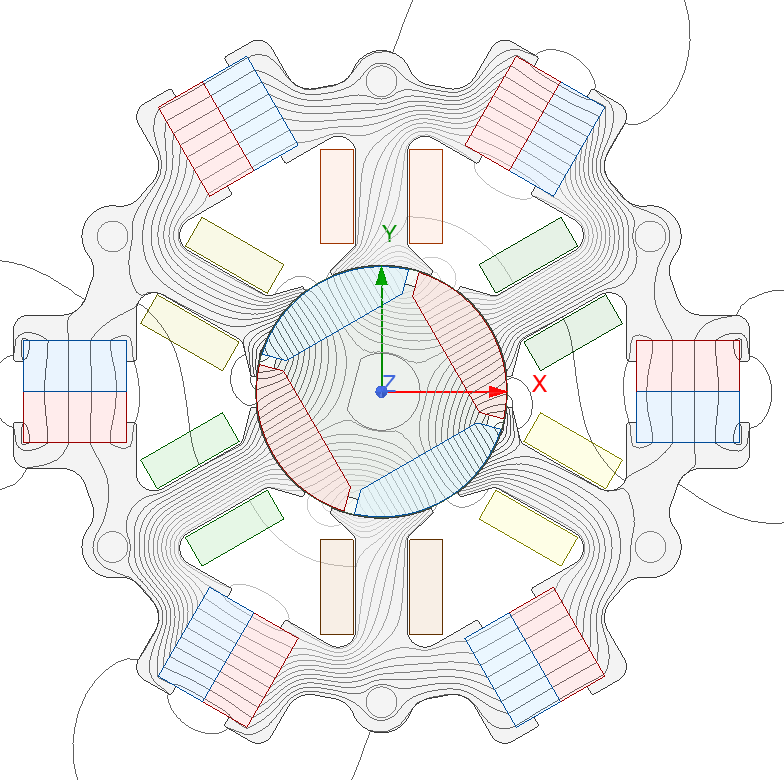
Schematic representation of the electromagnetic motor architecture.
The efficiency values are linked to a specific laboratory prototype, a power level of approximately 100–150 W, specific operating points and measurement conditions, including the power electronics.
About the company
Research, prototyping and partner-driven development of next-generation drives
TorqueFuture s.r.o. is a Slovak deep-tech company focused on the research and development of high-efficiency electromagnetic motors. The company was established as an organisational framework for the further development of a patented technology that has been tested over time through functional prototypes.
The project focuses on electromagnetic design, magnetic-circuit optimisation, prototype testing and preparation of the technology for application-oriented validation. TorqueFuture does not currently present a finished serial product, but a laboratory-validated technology with potential for further development.
The company holds an official Certificate of Competence to Perform Research and Development and develops cooperation with academic partners in simulations, measurements, optimisation and preparation of R&D projects.
Technology
Electromagnetic motor with permanent magnets in both the stator and the rotor
The technology uses a different torque-generation architecture compared to conventional electric motors. The objective is to reduce continuous electrical losses, thermal load and improve energy efficiency under suitable application conditions.
Technology framework
The architecture diagram is shown in the introductory section. This section focuses on the operating principle, application relevance and the boundaries of validation performed to date.
- permanent magnets are used in both the stator and the rotor,
- the results are linked to a specific laboratory prototype and measurement conditions,
- each power class requires its own electromagnetic design and validation measurements.
Operating principle
Torque is generated predominantly by the interaction of permanent magnetic fields. Windings and coils are used primarily to influence, switch and commutate magnetic flux, rather than as the main current-intensive torque-producing element.
Development potential
Preliminary results indicate the potential for lower heat losses, higher efficiency and more stable behaviour during long-duty operation. However, each target application requires its own design, optimisation and validation measurements.
Magnets in both stator and rotor
The architecture uses permanent magnets in both active parts of the motor.
Flux commutation
The coils control the direction and timing of the magnetic flux.
Lower thermal load
Reducing current-related losses may improve the thermal behaviour of the system.
Application-specific optimisation
The design must be adapted to the specific power class and duty cycle.
Experimental validation
Laboratory measurements of a functional prototype
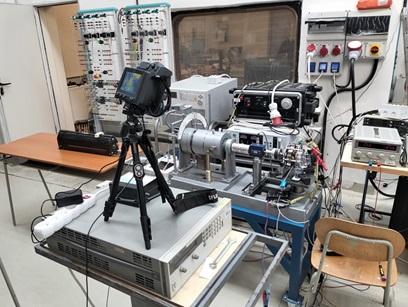
Laboratory measurements of the functional prototype at a power level of approximately 100–150 W have demonstrated an efficiency of approximately 89–94%, including the power electronics, depending on the specific operating point and measurement conditions.
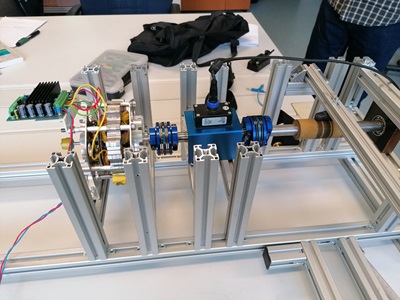
STU
Measurements of efficiency, performance characteristics and prototype behaviour at different operating points.
UNIZA
Technical assessment, simulation analyses, control measurements and recommendations for further optimisation.
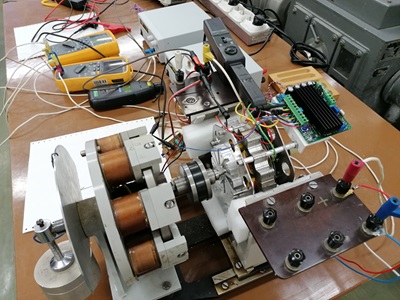
SAV
Earlier laboratory measurements of the functional prototype and basic operating parameters.
Application potential
For systems where energy, heat and reliability are critical
The technology has potential in applications with long-duty operating cycles, limited cooling or constrained available energy. Further development requires application selection, optimisation and validation in a relevant environment.
Industrial and technical use
- drives with long-duty operating cycles,
- devices with limited heat dissipation,
- battery-powered systems,
- specialised industrial drives and actuators,
- applications where cumulative losses affect overall system efficiency.
Space-relevant use
- actuators and positioning systems,
- robotic mechanisms and manipulators,
- drives for systems with limited available energy,
- devices where heat dissipation is difficult or limited,
- subsystems requiring stable long-duty operation.
Intellectual property
Patent protection and European application
Slovak patent
Jozef Gerát is the owner of Slovak patent SK 289 351 titled Electromagnetic Motor.
European application
European patent application EP4264789 is, according to the available documents, under examination. The EPO application number is EP21844078.2.
Role of TorqueFuture
TorqueFuture s.r.o. acts as the project, research-and-development and commercialisation entity. Legal and licensing matters are addressed within the scope of the relevant contractual documents and after professional consultation.
Research and cooperation
We are looking for partners for further development and validation
The aim is to move the technology from a laboratory-validated prototype toward application-oriented demonstrators and validation under selected operating conditions.
Electromagnetic design
Optimisation of the magnetic circuit, stator and rotor geometry, material parameters and losses.
Prototyping and testing
Manufacturing of functional samples, efficiency measurements, thermal tests, load measurements and diagnostics.
Application validation
Selection of a suitable use case, testing in a relevant environment and preparation of materials for a partnership or licensing model.
Documents
Public materials and documents
Document links can be adjusted according to which materials will be publicly available to partners.
Contact
Contact for partners and R&D cooperation
We welcome partners for technical validation, application use, grant projects and further development of the electromagnetic motor architecture.